

Beauregard's Tailor
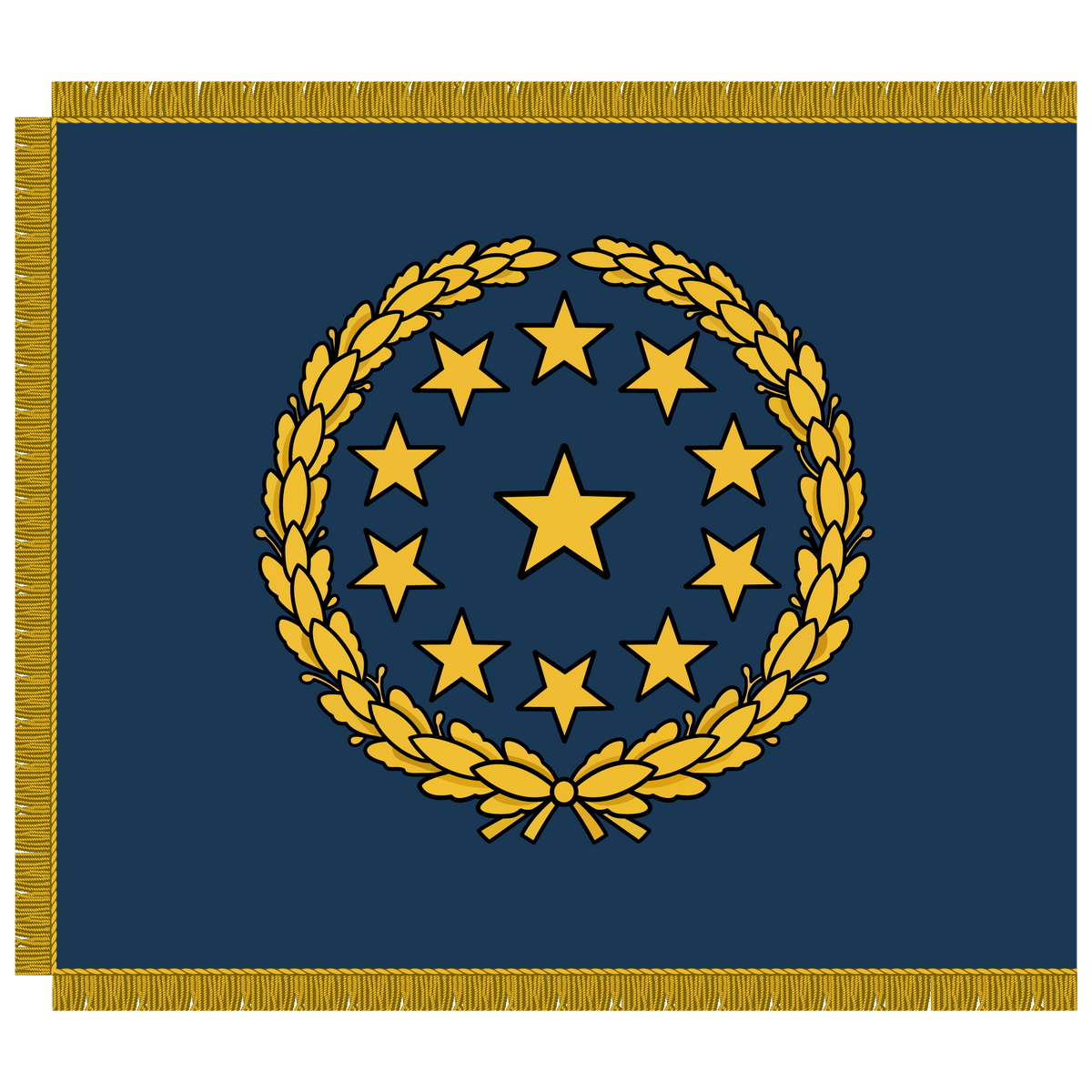
"God and Our Country" Fernandina Volunteers Flag Stickers/Magnet
"God and Our Country" Fernandina Volunteers Flag Stickers/Magnet
Couldn't load pickup availability
In 1859 as war clouds loomed Florida Governor Madison Starke Perry,a strong states rights advocate, called for a reorganization of the states militia. Almost overnight militia units responded all over the state. Fernandina, Florida was no exception. Fernandina on Amelia Island along Florida's northeast coast boasted a light house,a busy seaport,a railhead for the longest railroad in the state and a partially completed fort (Fort Clinch) on the north end of the island..According to the 1860 census, the population was listed at 1390 with 602 of those blacks, both slave and free. The citizens responded to Governor Perry's call, forming a militia company made up of residents of Fernandina and Nassau county. This company was under the command of Captain Joseph Rutledge Finegan , who would later become one of Florida's most prominent Civil War figures. Born 1814 in Clones, Ireland, he came to this country as a young man and served in the U.S. Army. Prior to the war he lived in Nassau County running a plantation and a sawmill. He was also a business partner with Florida Senator David Yulee in a railroading venture. In politics Joseph Finegan represented Florida in the Secession Convention voting for Secession. During the war he would rise to the rank of Brigadier General commanding troops in the state at Olustee where Confederate forces won a decisive victory over invading Union forces .In 1864 he commanded the Florida Brigade in the Army of Northern Virginia. As early as December 1860 the Fernandina Volunteers were primed and ready for action. Almost as if seeing into the future, on December 18th 1860, Captain Finegan wrote the mayor of Charleston South Carolina that at a recent meeting the volunteers had adopted a resolution that if it should become necessary to use force to obtain possession of the forts in Charleston Harbor he was willing to send a detachment of 25 men or more for that purpose. The election of Abraham Lincoln as president swelled the ranks of the Fernandina Volunteers and the volunteers quickly moved to seize Fort Clinch on the north end of the island. In a matter of days the volunteers were enrolled into service of the state of Florida. The Fernandina newspaper stated that the Volunteers "embraces among many of our oldest and influential citizens". On January 8th the Fernandina Volunteers were part of the forces that seized Fort Marion in Saint Augustine, Florida. Many of the guns there were quickly removed and transported to Fernandina. On January 10th, Florida succeeded from the union as the Volunteers quickly went to work mounting the guns in Fort Clinch and along the north end of the island between the fort and the ocean. Fernandina quickly became a boom town with troops from all over the state assembling there organizing for war.
It is not known exactly when the Charleston painter, C.W. Stiles, was commissioned to produce a flag for the Volunteers. The 1860 census list C.W. Stiles as a 38 year old Canadian native working in Charleston as a painter. The hand painted silk flag is signed and dated 1861. In May of 1861 Capt Finegan was appointed military advisor to Governor John Milton and resigned with Leonard Dozier Jr. quickly elected Captain of the unit. One source states the flag was presented to the group shortly after by Captain Dozier's daughters in a ceremony. One member, Benjamen W. Thompson, described the volunteers in his memoirs, "We met at the armory for drill and social purposes, an generally, had a good time. We added to our numbers by recruiting some Greek fishermen and some long shore men, and generally the Riff-raff of the town. We were cheaply uniformed in blue flannel shirts and gray jeans trousers with red flannel stripes. The men sang songs, fished from the wharf, played games and perpetuated jokes. The business men got excused to attend to business by day and did some night duty or hired black men in their place."With this lack of discipline it is easy to understand why members slowly began to join other units forming in the area. Some of the earliest are noted around April of 1861 with the Broome brothers, George and Robert joining the First Florida Infantry .It is not known when the Fernandina Volunteers officially disbanded but members slowly began to filter away. On February 24, 1862 the Captain, Leonard Dozier Jr. joined the Marion Light Artillery.
In early 1861 General Robert E. Lee under direction of Jefferson Davis inspected the coastal defenses from the Carolinas down to St. Augustine, Florida. In a letter to his daughters he remarked "I have been down the coast as far as Amelia Island to examine our defenses. They are poor indeed and I have laid off work enough to employ our people a month. I hope our enemy will be polite enough to wait for us. It is difficult to get our people there to realize their positions."Lee's inspection finally led to the conclusion that this part of Florida was of little strategic importance and too difficult to defend. In February 1862 he ordered that all troops should be withdrawn from the coastal areas. On March 1,1862 the evacuation started. Most of all the artillery pieces were removed and sent to secure locations inland. Eighteen were sent for the defense of Savannah, and fourteen guns that could not be removed were spiked. Colonel Edward D. Hopkins of the Fourth Florida issued a special notice on March 1st that a special train would leave the city expressly for the transportation of all women and children from the city on March 2nd. On Sunday March 2nd Union forces captured nearby Cumberland Island and this seemed to speed up the evacuation of the city. By 2:30 pm the following day the Confederate forces were moving out of the city. Union forces entered the harbor on march 3rd in what was called the largest amphibious action in U.S. History as the last inhabitants were leaving. The last train leaving the city was spotted on a track that ran alongside the river and chase was given by the U. S. Gunboat Ottawa signaling the engineer to stop. An eyewitness stated that "the passengers hooted, jeered, and waved handkerchiefs derisively from the car windows and the gunboat fired several shots at it, aiming at the locomotive." One shell killed two men on a flatcar, but the train arrived safely on the mainland. Shortly after the river steamer Darlington was spotted trying to escape the union gunboats. The Darlington was a 298-ton side-wheel steamship built at Charleston South, Carolina in 1849. It was owned by Jacob Brock a transplanted Vermont native who ran a steamship line between Charleston, Savannah, and the Florida coastal towns hauling freight and baggage. The following is the report of commander Percival Drayton of the U.S.S. Pawnee. "A small steamer was discovered attempting to escape up the narrow creek over which the railroad bridge passes, the draw which she had went through shortly after the train had crossed. Several shots were fired at her without effect, and as the Ottawa could not go up the creek, Commander Rogers followed her with two of his armed boats, captured and brought her alongside. She was found to be filled principally with women and children, but also had on board a surgeon in the Confederate Army and a number of mules and wagons belonging to the Quartermaster's Department."
It was probably from the captured baggage on the Darlington that William H. Rutherford (chief engineer on the U.S.S. Pawnee) obtained the Fernandina Volunteers flag. Wide spread looting was also reported in Fernandina but since Rutherford was directly involved in the capture of the Darlington and her baggage it was there that he likely came into possession of the flag.
William H. Rutherford was a career naval officer born in Philadelphia on January 1, 1828. He entered Naval service as an assistant engineer in 1849 serving with M.C. Perry on the Pacific coast survey and on the expeditions to Japan and South America. He served in actions from the Potomac to Louisiana figuring in many battles and was involved in the capture of the privateer Florida. After the war he served on Indian and European stations and then at the Pensacola Navy Yard before retiring on October 26, 1874. On March, 1898 at the age of 70, William Rutherford passed away and was buried in Washington D.C.
Each purchase comes with 2 stickers or 2 magnet.
Share