

Beauregard's Tailor
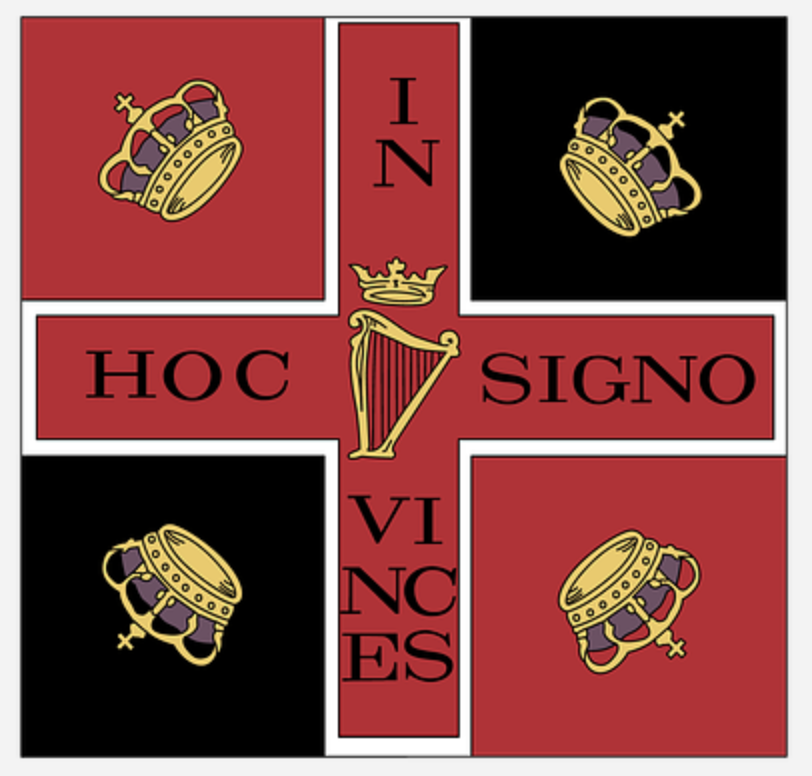
Le Régiment de Dillon (Dillon’s Regiment) Sticker/Magnet
Le Régiment de Dillon (Dillon’s Regiment) Sticker/Magnet
Couldn't load pickup availability
Le Régiment de Dillon (Dillon’s Regiment) was first raised in Ireland in 1688 by Theobald, 7th Viscount Dillon, for the Jacobite side in the Williamite War. He was then killed at the Battle of Aughrim in 1691.
Williamite War
During the Jacobite War, the regiment went to France in April 1690 as part of Lord Mountcashel’s brigade, in exchange for some French regiments amounting to 6,000 troops.
After the Treaty of Limerick in 1691, the regiment remained in the service of the kings of France under its present name. It was next commanded in France by Theobald’s younger son, Colonel Arthur Dillon, until 1733.
Colonel James Dillon was killed in action leading his regiment at the battle of Fontenoy in 1745, while his brother, Colonel Edward Dillon was killed at the Battle of Lauffelt two years later.
The formation continued to recruit from the Wild Geese Irish exile community.
By 1757, its uniform was still the Irish Brigade’s red coats, showing its loyalty to James III, the Old Pretender, with the black facings indicating each regiment. A member of the Dillon family remained hereditary colonel-proprietor of the regiment up to 1747.
Three caretaker commanders led the regiment until the last Dillon commander was old enough to take over in August 1767. Louis XV wanted to maintain the link with the family which had given so much service.
Fontenoy and Grenada
As a part of the Irish Brigade, the regiment covered itself in glory at the battle of Fontenoy in 1745, but suffered heavy losses. It was reinforced by a merger with the Régiment de Lally in 1762, and with the Régiment de Bulkeley in 1775.
From 1777 to 1782, the Dillon Regiment fought as part of the French expeditionary force in the American Revolutionary War.
The regiment participated in the capture Grenada in 1779. The regiment also participated in the failed French and American siege of British-held Savannah in 1779.
Share